July 22, 2025
UX Design Challenge: Real Work, Real Visibility
Exploring how LinkedIn could bridge the gap between talent and opportunity through Active Contributions: a new way to build credibility through real, collaborative work.
Part 1
There's no doubt that an individual's experience plays a major role in landing an opportunity.
Beyond finding alternative means to gain experience, proving the skills and company fit can also be an equally daunting task, especially if the only means of representing oneself is through a self-written resume, portfolio, or LinkedIn profile. With the ever-growing competition, it becomes increasingly difficult to stand out and present credibility.
Early-career professionals (and those who changed their career) especially are faced with an additional paradox: you need experience to get the job, but you need the job to get experience. In fact, according to this LinkedIn article Hiring's new red line: why newcomers can't land 35% of "entry-level" jobs from August 2021, we see a chart clearly illustrating how 8% to 60% of entry-level jobs within 12 industries requires a minimum of 3 years of professional experience.
At the same time, companies and hiring teams are flooded with AI-generated resumes, portfolios, and applications, making it harder than ever to assess who's actually a good fit. Everyone's looking for credibility, but no one knows the best way to prove it.
Why This Idea Came to Life
After personally experiencing how hard it is to stand out in a hyper-competitive market — and watching others around me go through the same thing — I kept thinking: what if there was a more dynamic, transparent, and collaborative way to gain credibility?
I wasn't just thinking about how individuals could land jobs faster. I was also thinking about how companies could better recognize great talent earlier, without the exhausting cycle of cold applications and multi-round interviews.
This led to the concept I introduced in my recent UI Redesign Challenge, Credibility in Action, Right on LinkedIn, where I reimagined a LinkedIn profile page with a feature called "Active Contributions".
But this article isn't about visuals. This is about the idea: what it solves, who it helps, and how it could realistically work.
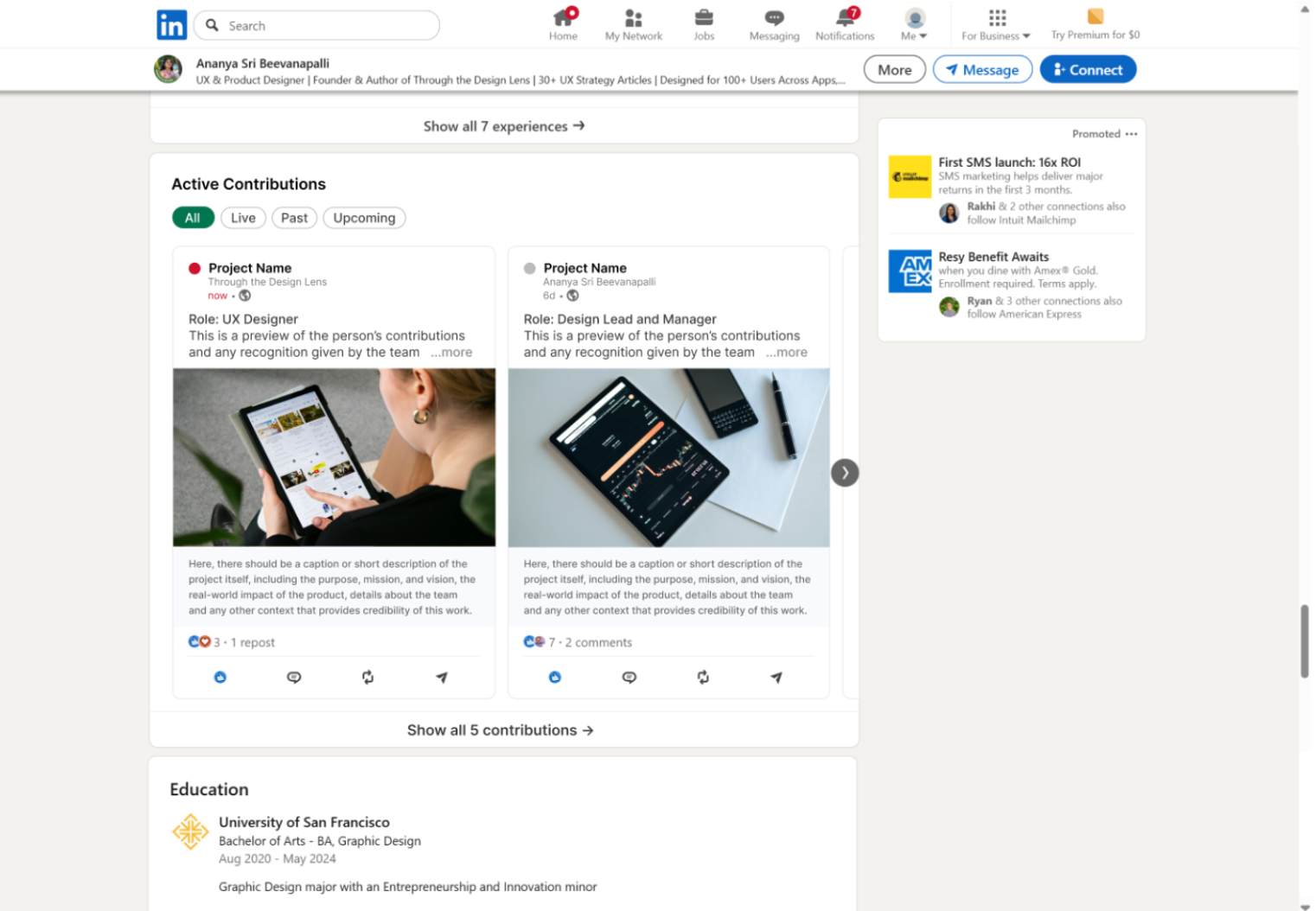
My Figma UI Redesign Including "Active Contributions" in LinkedIn
Introducing "Active Contributions"
Imagine scrolling through someone's LinkedIn profile and, right below their Experience section, you find a new section titled "Active Contributions".
This space would showcase public, collaborative projects the individual has contributed to — past, live, or upcoming. LinkedIn could host such collaborations on their platform and they can allow individuals to link in their live collaborations from external sites, sources, or events (e.g. a remote hackathon). Think of it as a hybrid between GitHub commits, Behance showcases, and Google Docs-style collaboration — but native to LinkedIn and more reflective of how people work, and not just what they've done.
Within this section, each project entry could include:
- A short description of the project and its goals
- A timeline (past, current, future)
- A snapshot of this person's contribution (e.g., UI designed, strategy suggested, copy written)
- A few highlights or endorsements from collaborators
- A button to "See More" for project details or documentation
It would give real insight into how someone thinks, collaborates, and solves problems in real-world environments.
Who This Helps And Why It Works
For individual professionals, it would help to:
- Build credibility through actual contributions, not just job titles
- Gain real-world experience without needing to be hired first
- Show how they collaborate and communicate, not just the output
- Discover if a company, role, or industry is a good fit
- Reduce the risk of falling for job scams by engaging with verified companies
- Gain early access to open-source or entrepreneurial projects looking for collaborators
- Expand their network through meaningful, skills-based collaboration
- Earn contextual trust and referrals, beyond just knowing someone casually
For recruiters, companies, and product owners, it would help to:
- Spot strong candidates earlier with less reliance on polished resumes
- Reduce time and cost of multi-stage interviews
- See how a candidate collaborates in real-world settings, especially in relation to their company and product
- Avoid sifting through AI-generated content
- Attract talent to smaller or part-time projects that need extra hands
- Watch a professional grow over time, and not just at the point of application
In other words, it's as if both the company and the individual get a preview of what it's like to work together on a project — while building both experience and a stronger network — to increase the chances of properly working together full-time in the near future.
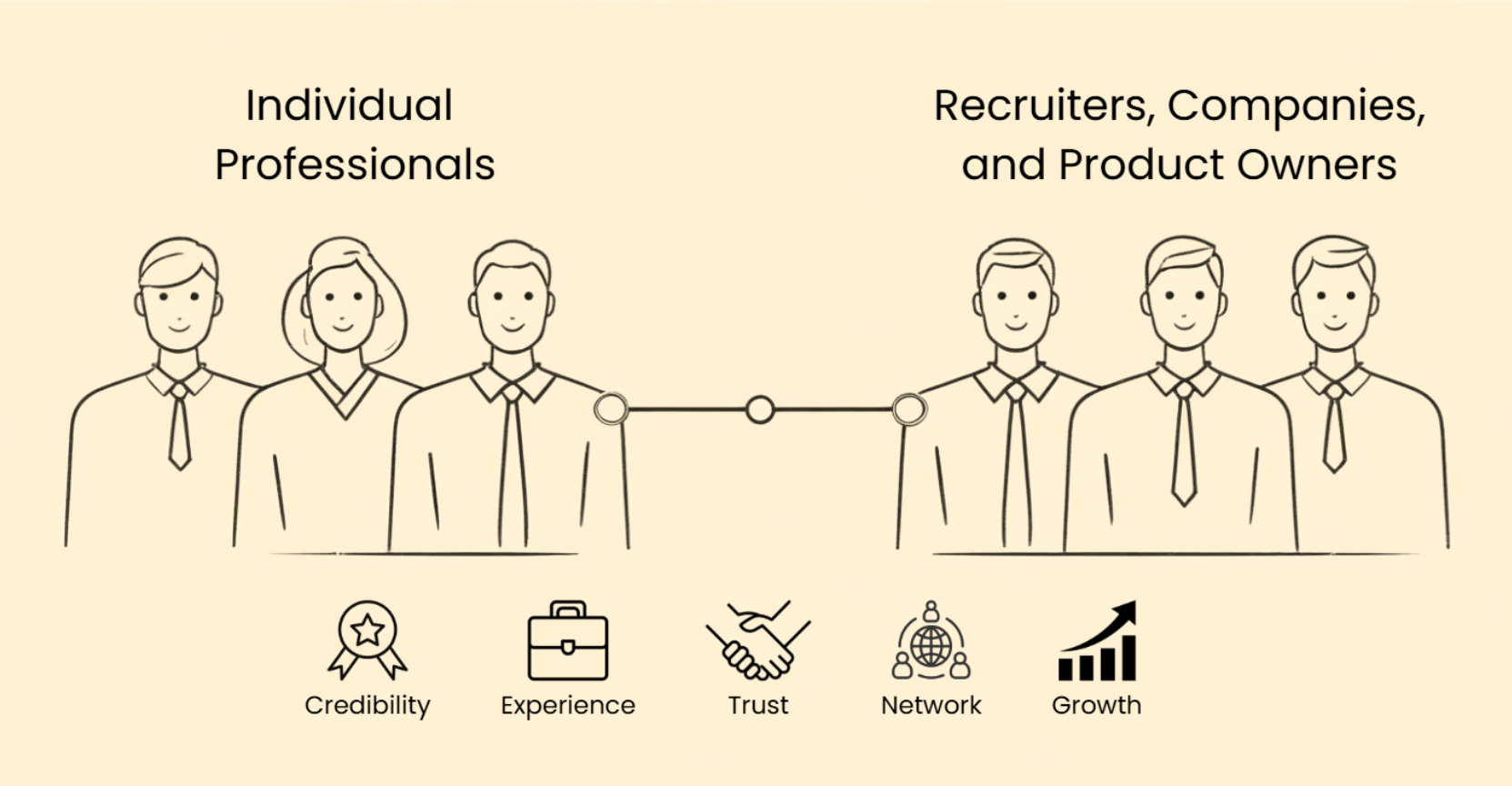
Bridging the Gap in the Job Market (Made with Canva)
Three Possible Models
The idea of "Active Contributions" benefits everyone within the job market in multiple ways, and I feel that there are many options for how it could be applied. To bring this LinkedIn feature to life, I explored three implementation models, including their pros and cons:
Model 1: Open Participation Projects
With this model, anyone can contribute to any public project. The initial steps are simple: companies would need to publicize their project on LinkedIn, with the goals and other necessary information included, and with a list of the minimum required professionals of each role (e.g. 3 designers, 5 engineers, 2 managers, etc.) More people can always join — and a maximum amount can be placed if absolutely required — but enforcing a minimum would ensure a diverse, productive, and collaborative team.
Individuals can join (similar to joining a live video conference on LinkedIn) and directly work with other joined members towards said project. All of the contributions are also tracked and visible for future reference and to be placed directly into the profiles of each individual contributor. Each project will also list who all of the contributors are, what role they played, and what impact they produced.
Pros:
- Inclusive and accessible to early-career professionals
- Encourages participation and shared learning
- Removes gatekeeping around opportunities
Cons:
- Can get chaotic without proper documentation or structure
- Requires companies to moderate quality and inputs
- Uneven contributions and potential for miscommunication
Model 2: Contribution Teams
The second model functions similarly to the first model, but all interested professionals are grouped into teams to tackle the same project. This grouping could be done with some automation to ensure that each team includes members of multiple roles (designers, engineers, managers, etc.) Once all teams complete and submit their work, the company will choose the most useful or promising team's outcome and may reward them with additional visibility, recognition, and/or a LinkedIn-issued certification.
Pros:
- Structured collaboration with defined expectations
- Enables companies to compare different solutions
- Incentivizes thoughtful teamwork and performance
Cons:
- More exclusive; not everyone can participate
- Could feel competitive or stressful
- Starts to resemble unpaid speculative work if not monitored
Model 3: A Hybrid Model
Since the first model values openness, while the second values structure, what if we combined both? In this hybrid approach:
- Anyone can contribute to an open project space without pressure
- High-quality teams or individuals may be featured or rewarded
- Projects have transparent scopes, documentation, and boundaries
- Participants always get credit, and companies are encouraged (or required) to acknowledge all visible contributors
This balances inclusivity with control and makes space for both learning and high-impact outcomes, making it the most plausible model to move forward with.
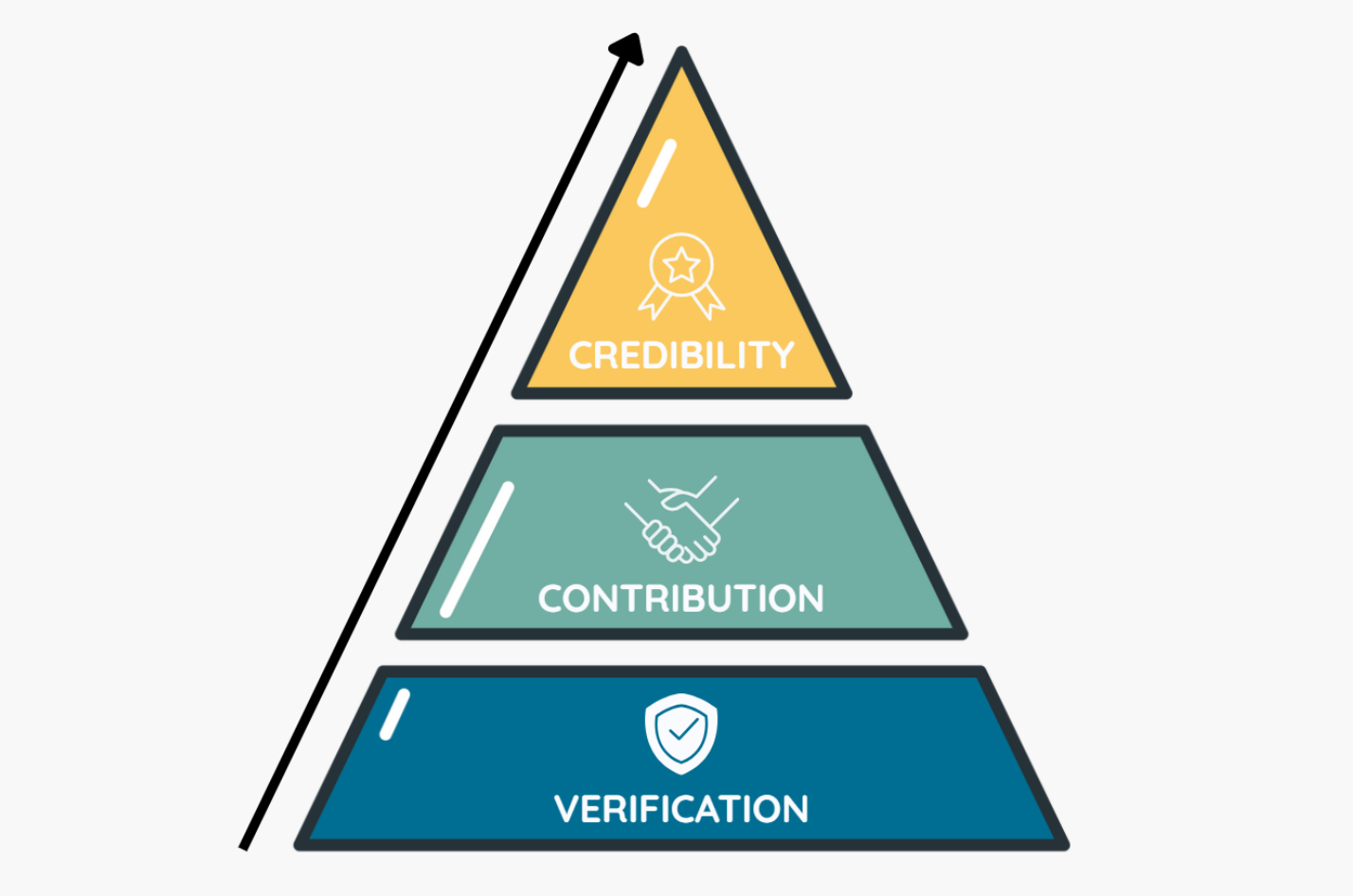
Building Credibility, Ethically and Legally (Made with Canva)
Ethical and Legal Considerations
This feature could open the door to exploitation if not thoughtfully designed. Here's what must be built in:
- Legitimate Project and Company Verification: All companies or individuals submitting a public collaboration must go through a legitimacy check, including verified identity, project scope clarity, and signed terms promising not to exploit contributors.
- Contributor Safety and Accountability: Participants must verify they aren't from competing companies or involved in legal conflicts. They should commit to respecting the confidentiality and IP of what they see or contribute to.
- Compensation and Recognition Policies: While not all contributions will be paid, there must be clarity. Unpaid work must be acknowledged in meaningful and helpful ways (visibility, certificates, priority in internal job openings), and companies must be transparent if any part of the work will be used.
- Tiered Documentation Access: To avoid IP leakage, project documentation should be tiered. Only basic information is publicly visible and contributors unlock deeper access after participation, time spent, and/or mutual agreement.
- Contribution Proof Without Skill Barriers: Rather than pre-screening contributors for skill, LinkedIn could use endorsements, contributor history, or even project-specific challenges to ensure some level of reliability without gatekeeping.
When designed ethically, this idea can benefit everyone: individual professionals, teams, companies, product owners, and the hiring ecosystem at large.
What's Next: Part 2
For Part 2 of this UX Design Challenge series, I'll walk through the design and implementation process of this concept, with a prototype that explores what a LinkedIn profile featuring Active Contributions could look like, including how projects are displayed, joined, and credited.
However, before diving into visual design, I wanted to explain the "why" behind this feature, including the pain points it solves, the impact it can have, and the importance of designing it responsibly.
Some Final Thoughts
As the job market evolves, visibility shouldn't just come from job titles; it should come from real work that is ongoing, collaborative, and dynamic. That's the type of contribution that recruiters want to see, and it's the kind of opportunity professionals need access to.
If platforms like LinkedIn can empower that kind of exchange, we may be able to bridge the gap between talent and opportunity in ways that are more ethical, effective, and inclusive than ever before.
What are your thoughts on this concept? Would you contribute to or hire from a feature like this? Which of the 3 models do you prefer and why?
Part 2
We're back with the new idea called "Active Contributions", where professionals like you and me can show how we work and gain both credibility and opportunities a lot faster.
If Part 1 was about exploring a problem space and asking "What if?", Part 2 is about grounding that vision in reality. In today's article, I bring the concept of Active Contributions to life, not just as a speculative idea, but as a thoughtful user experience grounded in real needs, ethical concerns, and implementation constraints. This is where insight becomes interaction.
Quick Recap: What Is "Active Contributions"?
Active Contributions is a proposed LinkedIn feature that allows professionals to showcase real-time work on collaborative projects, giving visibility to both process and progress, not just polished portfolios.
This feature benefits contributors by showcasing their involvement in meaningful work, and helps project leads gain traction and recruit collaborators. It also benefits:
- Recruiters: by making candidates' skills and processes more transparent and verifiable.
- Companies: by surfacing promising talent already vetted through real-world collaboration.
- Product owners and hiring managers: by reducing hiring friction and gaining better signals for skill, collaboration, and problem-solving.
If you haven't read Part 1 yet, or would like a refresher, click here. Reading Part 1 first would provide better context for the rest of this article.
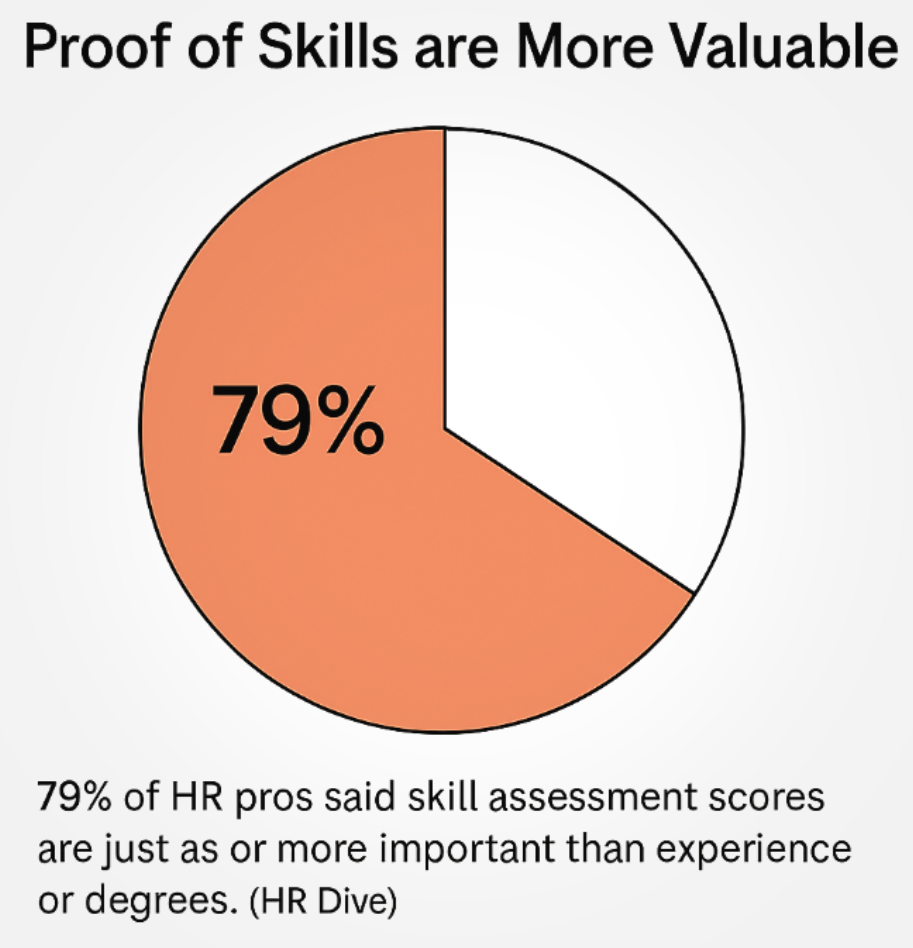
One of the Statistics Listed Below from My Research
Research and Strategy
Before diving directly into the design and user experience of the idea, there is a lot more to consider and discuss to ensure that we start off our ideation process strong and with the right foundation.
To begin, I did some more research to find statistics that would help prove why "Active Contributions" is a helpful addition to LinkedIn for both individual professionals and for the project leads alike.
Referrals, Visibility & Trust
- Zippia: Referrals are 4x more likely to be offered a job than website applicants
- Zippia: Employee referrals account for 30–50% of all hires
External validation (referrals, endorsements) remains more trusted than self-reported resumes or portfolios.
Process Over Pedigree
- HR Dive: 79% of HR pros said skill assessment scores are just as or more important than experience or degrees
- HR Dive: 36% said a candidate who scores well on an assessment, but lacks experience, is still "very likely" to be shortlisted
Hiring is shifting toward demonstrated ability over resume checkboxes.
Resumes Alone Aren't Enough
- TestGorilla (2024): 94% of employers say skills-based assessments are more predictive of job performance than resumes
- TestGorilla: 51% of employers struggle verifying resume accuracy; 43% can't assess skills via resume alone
The need to see real work is growing, especially in a world of AI-generated content.
LinkedIn-Specific Signals
- LinkedIn Talent Blog: 72% of hiring managers prefer a digital footprint (portfolio, GitHub, etc.) over traditional resumes
- LinkedIn Article: 97% of HR and staffing professionals use LinkedIn in their recruiting efforts.
- LinkedIn Article: Candidates with a comprehensive LinkedIn profile have a 71% higher chance of getting a job interview.
LinkedIn is well-positioned to become the live credibility layer of the internet. In fact, looking at the LinkedIn-specific statistics from above, the next crucial step is to understand exactly why it's such a smart move for LinkedIn to apply this feature and how it fits into their own business goals.
- Aligns with core mission: Helping professionals showcase their skills and grow their careers
- Fills a gap: Static resumes and polished case studies fail to reflect real, ongoing work
- Improves hiring signals: Gives recruiters and managers better, trustable insight into how people work
- Supports creators and early-career talent: Especially valuable for those without strong networks or traditional credentials

Abstract Backend Process (Made with Canva AI)
Behind the Scenes
Now that we know for sure that we will proceed with LinkedIn's platform to apply this idea, let's take a look at how "Active Contributions" will work from the back-end. To design the front-end, I also considered the behind-the-scenes logic that powers the contributor experience, so I know my ideas are feasible and effective.
- Flexible Contribution Types: The platform accepts different types of contributions — like Figma designs, GitHub commits, Loom walkthroughs, or research notes — and tags them based on what kind of work they are. This helps display contributions clearly on both the project timeline and each person's profile.
- AI-Generated Summaries: When you add something, the system can generate a short, professional summary based on what you submitted. This makes it easier for others to understand your work at a glance. You can always edit or improve the summary if you want more control over how your work is described.
- Real-Time Project Timelines: Each project has a timeline that updates automatically as people add work. It's organized by date and can be filtered by task type or team member. This keeps the project space easy to follow, especially when multiple people are contributing in different ways.
- Contributor Access with Guardrails: Anyone can join public projects and start contributing, but project leads can set boundaries. For example, they can make files view-only or ask contributors to work in duplicates or forks instead of editing directly. This allows for openness and learning without risking accidental changes or disruptions.
- Simple Roles and Feedback Loops: There are just two roles, project leads and contributors. Contributors can add work and ask questions, but they can't remove anything. Project leads can offer optional public feedback, similar to Figma comments or GitHub reviews, so everyone can learn and grow together.
- Version Tracking for Growth: Each piece of work has a version history, so contributors can track how their ideas have evolved. This also makes it easier for others to see your progress over time, not just the finished product.
Constraints and Mitigations
As with every project, it's important to consider the various challenges or constraints that designers and engineers may face when building a new product or feature, and how they might go about mitigating them as much as possible. Below are some possibilities for our new feature:
Information Overload
- With multiple people contributing different types of work, a project space could get overwhelming fast.
- Mitigation: Use smart tagging, filters, and AI summaries to help people quickly understand what they're looking at. Users can also choose what to show or hide on their profile to keep things clean.
Quality Control in Open Projects
- Allowing open contributions is powerful, but it could lead to irrelevant, low-effort, or even harmful work being added.
- Mitigation: Project leads can set permissions like view-only files or ask contributors to work on forks. Public feedback and transparent comment threads also create a culture of accountability and learning.
Visibility Bias
- More experienced contributors might unintentionally dominate project visibility, making it harder for newer users to get noticed.
- Mitigation: LinkedIn could introduce equalizing features like "First 5 contributions" highlights, "Undiscovered talent" sorting options, or promote a mix of voices in trending projects.
AI Summary Limitations
- Automatically generated summaries may miss the nuance of someone's work, especially for early-career professionals who want to explain their thinking.
- Mitigation: AI summaries can be editable, with prompts that help users write more thoughtful self-descriptions. Feedback from others also adds context beyond the summary.
Trust and Misuse
- There's always a risk of people misrepresenting work or trying to take credit for things they didn't do.
- Mitigation: Contribution history, timestamps, optional approvals from project leads, and transparent comment logs make it harder to fake and easier to verify authenticity.
Platform Fit and Moderation Needs
- A feature like this adds a whole new dimension to how users interact with content on LinkedIn. It could require new moderation practices and platform policies.
- Mitigation: Start with smaller-scale, invite-only beta projects or limit to select categories (e.g., design, open-source, nonprofit) before wider rollout. Built-in reporting tools and contributor guidelines also help set clear expectations.

MVP to Phase 5
Rollout Strategy (MVP to Phase 5)
It's time to think about the build! I decided to apply a phased rollout, which ensures both learning and scalability:
- MVP: Contributors can join projects, submit updates, and see them on profile; Project Leads can add projects and moderate collaborations.
- Phase 2: Project creation tools for leads (manual validation, activity log, profile linking).
- Phase 3: Search projects within the feed using filters (i.e. available roles, required skills, project status).
- Phase 4: Integration with GitHub, Figma, and other collaboration tools.
- Phase 5: Endorsements, badges, analytics for contributions, and recruiter discovery layer.
Each phase adds functionality while validating demand and reducing risk.
Mapping the User Journey
Here's a high-level overview of the user journey — from both the contributor and project lead perspectives — based on what we discussed so far:
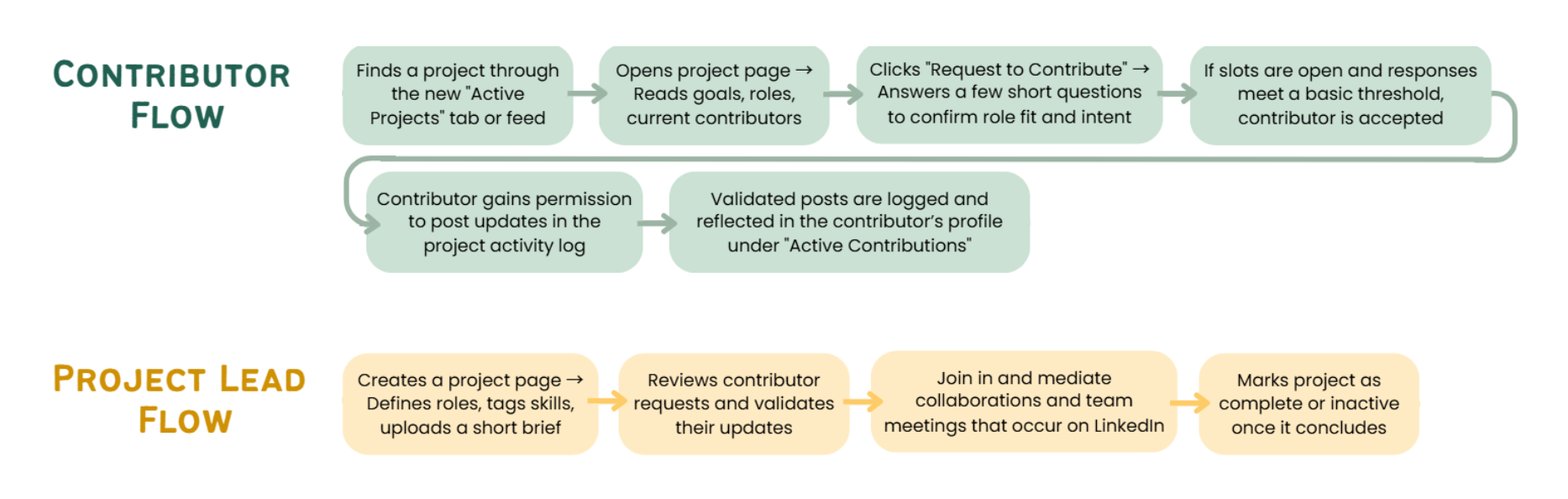
Basic User Journey for Contributor and Project Lead
What I'm Designing (and Why)
Now that we know the user journeys, we can start designing the feature. For this design challenge to be realistic and scoped, I chose to visualize the experience from the contributor's perspective alone. Specifically:
- How a contributor applies to join a public project
- How contributors are able to collaborate within LinkedIn
- How contributions get surfaced on the profile
This path represents the heart of the feature: giving professionals agency to join projects and gain visibility through real, validated work.
(For copyright and other legal and ethical purposes, I will only provide a hand-sketch that resembles LinkedIn.)
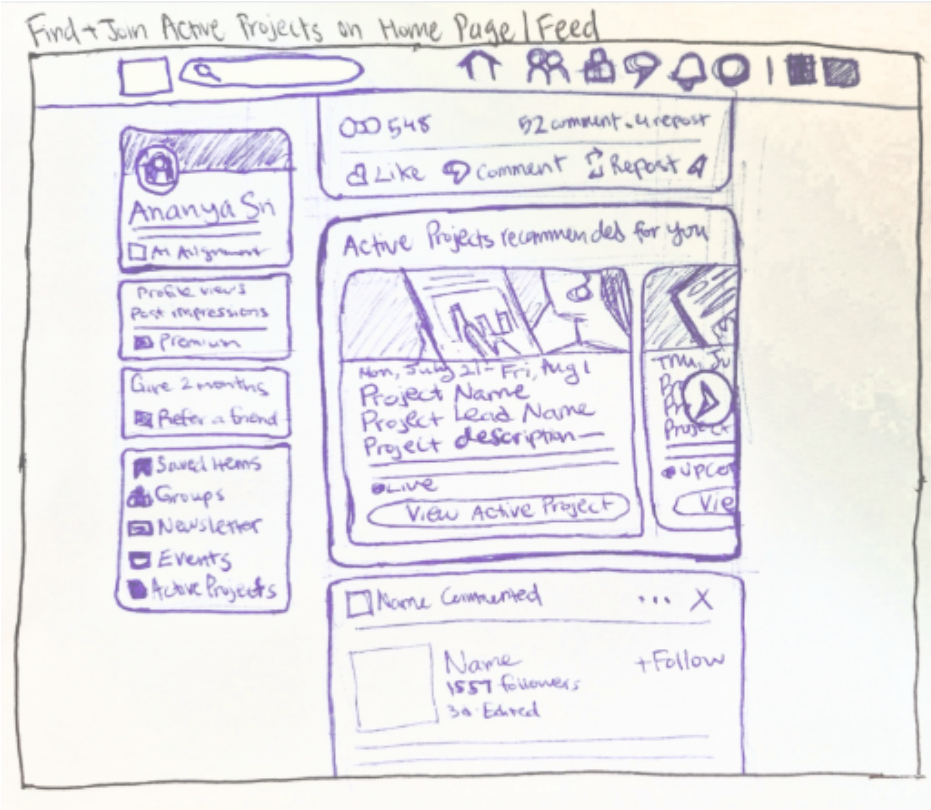
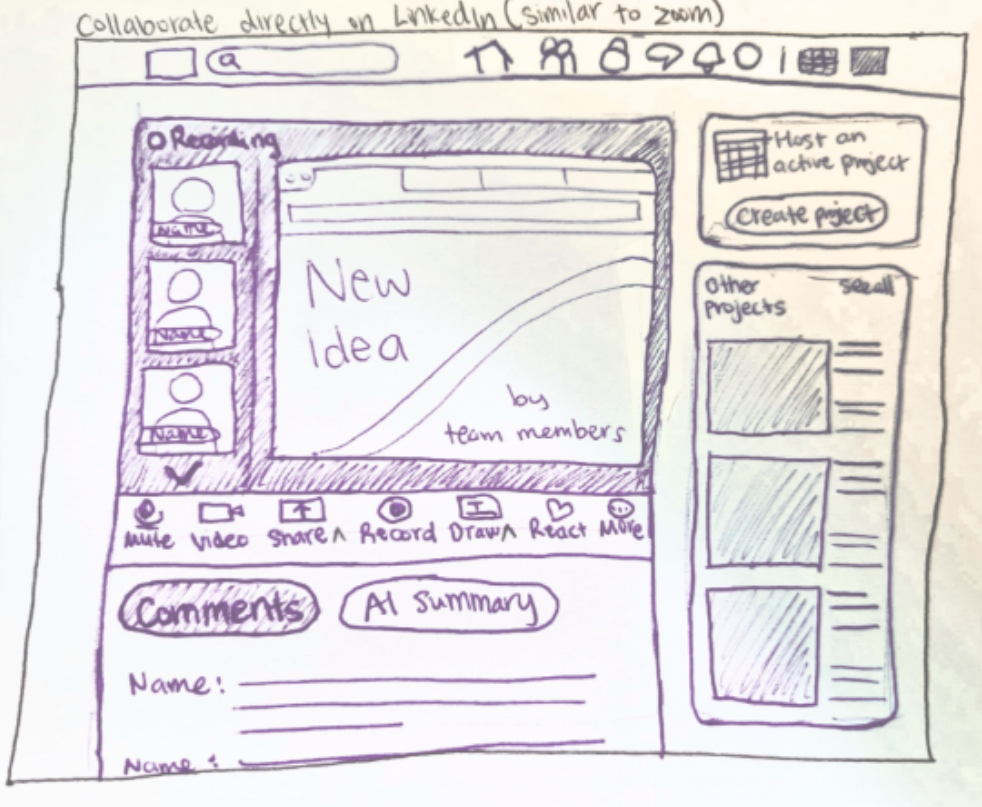
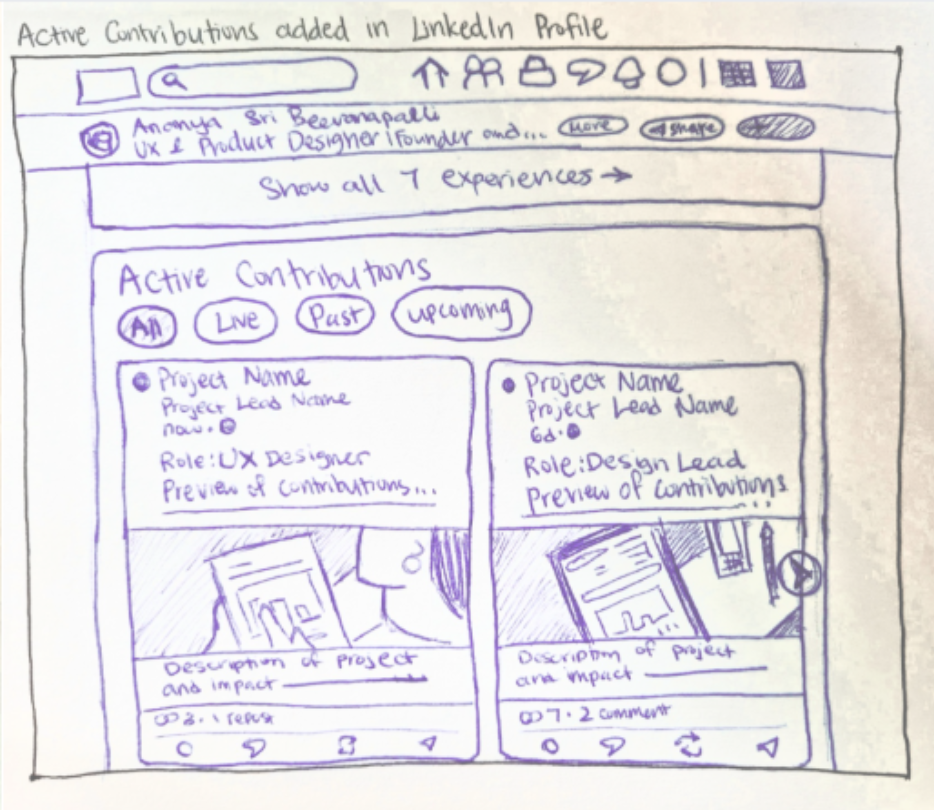
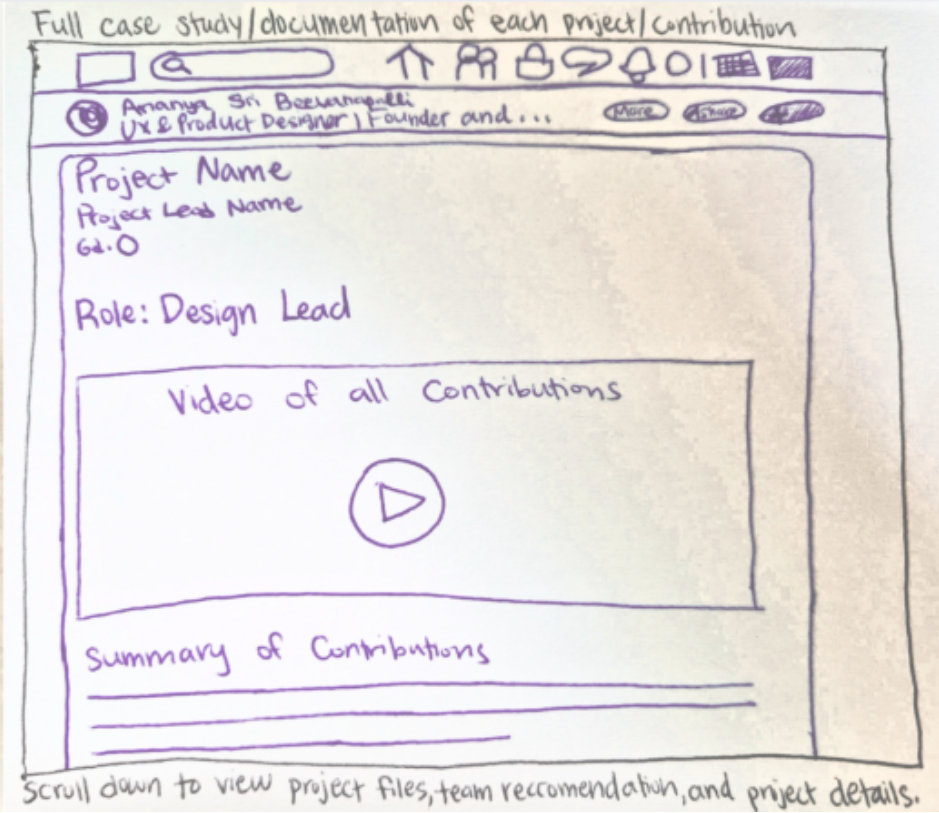
Hand-drawn Wireframes Based on Basic Contributor Journey
Constraints I Had to Work With
Every real-world project has limitations. Here are some of the constraints I faced during this design sprint.
- Time: Limited time meant I couldn't prototype both contributor and project lead workflows or every screen of at least one workflow
- Tools: No access to internal LinkedIn design systems, and had to stem away from digital tools to prevent designing a direct copy of LinkedIn's actual product, so the only tools involved were paper and pen
- Scope: Prioritized interaction clarity over visual polish for this phase
- Data Access: Without real data, I used hypothetical projects and placeholder logic
Reflections
It's always helpful to reflect back, since it forces me to think about ways I could improve my process or designs if I were to face a similar project in the future. So, if this were a real project inside LinkedIn, I would:
- Conduct more user research with recruiters and team leads
- Stress-test validation flows with edge cases (inactive leads, disputes)
- Consider async collaboration tools (Notion, GitHub, Google Docs integration)
- Explore contribution badges or shared ownership models
- Add accessibility checks across the workflow
Some Final Thoughts
This two-part challenge has helped me think more critically about how platforms like LinkedIn can evolve, from static portfolios to dynamic, inclusive, and verifiable ways of showcasing work. Designing backwards from a real user pain point led to a solution that feels both practical and visionary.
What might hiring look like if we evaluated people based on how they actively work, not just how they present it?